Recently, the European Clean Energy Technology Observatory published the "Water Electrolysis and Hydrogen in the European Union-2023 Status Report on Technology Development, Trends, Value Chains and Markets" (hereinafter referred to as the "Report"), which analyzes the status and development trends of water electrolysis production technology worldwide.
The Report combines the existing hydrogen research achievements in Europe, relevant EU scientific research projects, trade data, etc., to analyze the development status and trends of China's hydrogen industry. This is to promote the R&D and innovation of the EU's hydrogen industry, evaluate the competitiveness of the EU's clean energy industry, and assess its position in the global energy market.
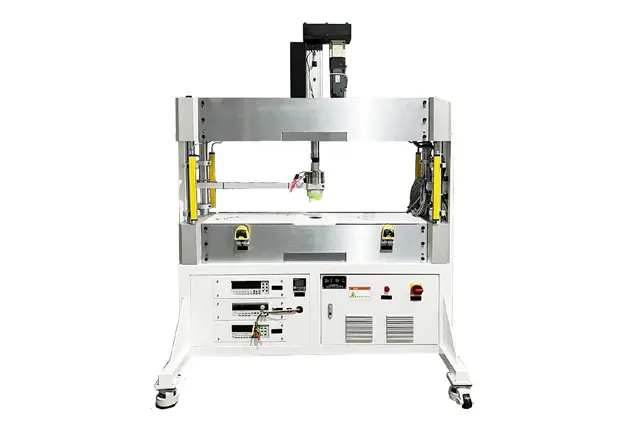
In terms of industry status and development trends, the Report shows that the global electrolyzer capacity increased from about 500 MW to 600-700 MW between 2021-2022 and is expected to reach nearly 2 GW by the end of 2023. Globally, China's development of electrolyzers is the fastest, with its capacity expected to reach 200 MW by 2022 and 1.1 GW by 2023; in the United States, the capacity of electrolyzers is estimated at 19 MW in 2022 and is expected to increase by 291 MW by the end of 2023. With the gradual realization of announced water electrolysis power generation plans, the number of electrolyzers worldwide will increase significantly by 2030. The Report points out that water electrolysis is currently the most mature and promising zero-carbon source hydrogen production method in hydrogen production. The current processes for producing hydrogen through water electrolysis are: alkaline electrolysis (ALK), proton exchange membrane electrolysis (PEM), high-temperature solid oxide electrolysis (SOEC), anion exchange membrane electrolysis (AEM), and proton-conducting ceramic electrolysis (PCC). Compared with other processes, ALK and PEM are relatively mature and are gradually being scaled up, while SOEC and AEM projects are gradually entering the implementation stage, and PCC is still in its early stages. From a cost perspective, the Report lists six main factors affecting the cost of producing renewable hydrogen (or low-carbon hydrogen) via water electrolysis: investment in electrolyzer equipment, operating expenses, electricity costs, load or utilization rate, other operating expenses (such as water and maintenance costs), and project capital costs. Among these issues, the cost of hydrogen production via water electrolysis is a crucial factor in determining the efficiency of hydrogen production via water electrolysis (LCOH) and is among the two most important aspects. Methods to reduce the cost of hydrogen production via water electrolysis mainly include increasing operating time, reducing electricity prices, extending system lifespan, and improving the operational efficiency of hydrogen production systems via electrolysis. During the optimization and validation of electrolyzer systems, advanced electrolysis test station solutions can help researchers evaluate operating performance and improve system reliability. IRENA estimates that by increasing operating time and reducing electricity prices alone, the price of hydrogen could drop by 80%.
The EU's growing demand for hydrogen is increasingly driving supply. The Report shows that the EU’s demand for hydrogen energy is projected to reach 8.7 million tonnes in2020, while Europe's (EU, European Free Trade Area, the UK) annual demand for renewable hydrogen production will reach 5.4 million tonnes annually, and to achieve this goal, an additional 600,000-750,000 tonnes will be needed annually starting from 2023.
Europe's hydrogen policies provide support for the application of water electrolysis.The Report shows that Europe is continuously introducing a series of supportive measures to promote the application of water electrolysis. The "European Green Deal," "REPowerEU" (COM (2022)230), "European Climate Neutral Hydrogen Strategy" (COM (2020)301), and "Communication-Strengthening Europe's 2030 Climate Ambition" (SWD/202/176), along with corresponding hydrogen strategies like "REPowerEU," have set the direction for the development of Europe's hydrogen energy sector. By 2024, and 2030, it plans to achieve 6 GW and 40 GW of electrolyzer capacity respectively. The appendix for "Communication-Strengthening Europe's 2030 Climate Ambition" (COM/202/562) projects that by 2050, the share of hydrogen in Europe's total energy mix will increase from less than 2% today to 13%. On March 2023, the EU will announce the plans for the European Hydrogen Bank, and in November, it will hold the first auction for renewable hydrogen. According to estimates by the European Hydrogen Organization, the production capacity for hydrogen within the EU, the European Free Trade Area, and the UK increased from 85 MW to 162 MW between 2019 and August 2022.
The expansion of electrolyzers in Europe is accelerating. According to the report, the global shipment volume of electrolyzers in 2023 is expected to be more than three times that of 2022, with the total installed capacity worldwide reaching around 2-3 gigawatts (compared to 0.8 GW in 2022 and 1 GW in 2021). China, as the major producer of electrolyzers, will continue to maintain its position as the world’s largest electrolyzer producer. To enhance its market competitiveness, the European Union has formulated energy plans such as “REPowerEU” and set battery capacity targets. To achieve these goals, the EU aims to produce ten million tons of renewable hydrogen and achieve 140 gigawatts of electrolytic water power generation by 2030.
Currently, research on water electrolysis faces many challenges both domestically and internationally. The report indicates that although water electrolysis is developing rapidly worldwide, its production volume is still small; (a) international trade in renewable hydrogen has not yet begun; (b) no progress has been made in the global identification and standardization of renewable hydrogen; the competitiveness of renewable hydrogen diminishes when natural gas prices fall; © there is a shortage of renewable energy; Europe still heavily relies on water electrolysis for hydrogen production.
 English