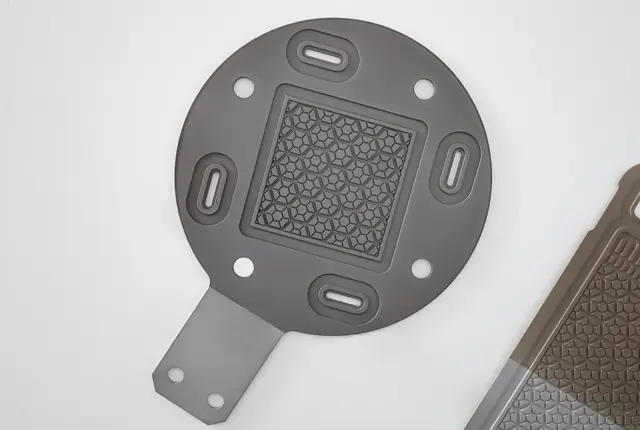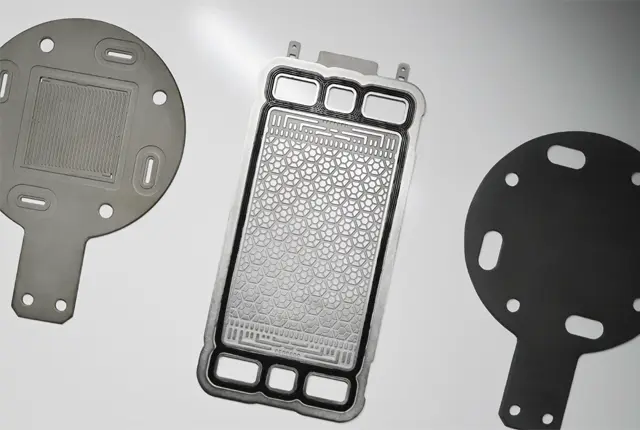
Tensor Technologies’ PEM electrolyzer bipolar plate design has been optimized for a standardized PEM water electrolysis stack configuration, featuring a dual-channel single anode water circulation loop design with a pressurized anode and cathode. This advanced bipolar plate in electrolyzer systems ensures efficient flow distribution, enhanced conductivity, and improved stack performance. As a high-efficiency bipolar plate electrolyzer component, it supports stable hydrogen production and long-term operational reliability. Alternative or customized bipolar plate designs with different specifications can also be tailored to meet specific customer applications.
*Customized products, please send your requirements to info@tensortechs.com
PEM bipolar plate electrolyzers are critical components used in the electrolysis process to split water into hydrogen and oxygen. These plates serve as conductive pathways, facilitating the flow of electrons and ions within the bipolar electrolyser system. A high-performance bipolar plate in electrolyzer applications also helps improve current distribution, gas separation, and overall operational efficiency. Coating services for these bipolar plates are essential to enhance their durability, conductivity, and resistance to corrosion. High-quality coatings ensure efficient performance, longevity, and reduced maintenance costs of the electrolyzer. By optimizing the functionality of bipolar plates, these services contribute significantly to the overall efficiency, durability, and cost-effectiveness of hydrogen production in modern bipolar electrolyzer systems, supporting the advancement of clean energy technologies.
● Maximum corrosion resistance
● H2 embrittlement protection
● Low contact resistance
● Efficient thermal conductivity
● Low cost per unit
| Product Matrix Estimate | ||||||||||||||||||
| Parameter | Units | Loki | Baldr | Tyr | Hel | |||||||||||||
| Number of Cells | 25 | 50 | 75 | 100 | 25 | 50 | 75 | 100 | 25 | 50 | 75 | 100 | 25 | 50 | 75 | 100 | ||
| Active Area | cm2 | 78 | 78 | 78 | 78 | 155 | 155 | 155 | 155 | 311 | 311 | 311 | 311 | 624 | 624 | 624 | 624 | |
| H2 Flow Rate | NLPM | 41 | 82 | 122 | 163 | 82 | 163 | 245 | 327 | 163 | 327 | 490 | 653 | 327 | 653 | 980 | 1306 | |
| O2 Flow Rate | NLPM | 20 | 41 | 61 | 81 | 41 | 81 | 122 | 162 | 81 | 162 | 243 | 324 | 162 | 324 | 487 | 649 | |
| Max Water Flow Rate | LPM | 5 | 10 | 15 | 20 | 10 | 20 | 30 | 40 | 20 | 40 | 60 | 80 | 40.3 | 81 | 121 | 161 | |
| Water Consumption Rate | L/hr | 1.96 | 3.92 | 5.89 | 7.85 | 3.9 | 7.85 | 11.8 | 15.7 | 7.8 | 15.7 | 23.5 | 31.4 | 15.7 | 31.4 | 47.1 | 62.8 | |
| Thermal Power | kWt | 1.75 | 3.5 | 5.25 | 7 | 3.5 | 7 | 10.5 | 14 | 7 | 14 | 21 | 28 | 14 | 28 | 42 | 56 | |
| Electric Input Power | kWe | 10 | 21 | 31 | 41 | 21 | 41 | 62 | 83 | 41 | 83 | 124 | 166 | 83 | 166 | 249 | 332 | |
| Voltage | V(DC) | 45 | 89 | 134 | 178 | 45 | 89 | 134 | 178 | 45 | 89 | 134 | 178 | 45 | 89 | 134 | 178 | |
| Current | A(DC) | 233 | 233 | 233 | 233 | 466 | 466 | 466 | 466 | 932 | 932 | 932 | 932 | 1870 | 1870 | 1870 | 1870 | |
| Product Matrix Estimate | |||||||||||||
| Parameter | Units | Freya | Njord | Odin | |||||||||
| Number of Cells | 25 | 50 | 75 | 100 | 25 | 50 | 75 | 100 | 25 | 50 | 75 | 100 | |
| Active Area | cm2 | 1247 | 1247 | 1247 | 1247 | 2499 | 2499 | 2499 | 2499 | 5004 | 5004 | 5004 | 5004 |
| H2 Flow Rate | NLPM | 653 | 1306 | 1959 | 2612 | 1306 | 2612 | 3919 | 5225 | 2612 | 5225 | 7837 | 10450 |
| O2 Flow Rate | NLPM | 324 | 649 | 973 | 1298 | 649 | 1298 | 1946 | 2595 | 1298 | 2595 | 3893 | 5190 |
| Max Water Flow Rate | LPM | 80.5 | 161 | 242 | 322 | 161 | 322 | 483 | 644 | 322 | 645 | 967 | 1289 |
| Water Consumption Rate | L/hr | 31.4 | 62.8 | 94.2 | 126 | 62.8 | 126 | 188 | 251 | 126 | 251 | 377 | 502 |
| Thermal Power | kWt | 28 | 56 | 84 | 112 | 56 | 112 | 168 | 224 | 112 | 224 | 336 | 448 |
| Electric Input Power | kWe | 166 | 332 | 498 | 664 | 332 | 664 | 996 | 1327 | 664 | 1327 | 1991 | 2655 |
| Voltage | V(DC) | 45 | 89 | 134 | 178 | 45 | 89 | 134 | 178 | 45 | 89 | 134 | 178 |
| Current | A(DC) | 3750 | 3750 | 3750 | 3750 | 7500 | 7500 | 7500 | 7500 | 15000 | 15000 | 15000 | 15000 |
The bipolar plate is a critical component in fuel cells, serving three key roles:
Electrical Conduction – Connects cells in series to form a stack while conducting current.
Gas Distribution – Delivers hydrogen (anode) and oxygen (cathode) via flow channels to catalyst layers.
Heat & Water Management – Helps dissipate heat and removes water byproduct to prevent flooding.
Made of graphite, metal, or composite materials, bipolar plates for pem fuel cells must carefully balance high electrical conductivity, excellent corrosion resistance, and lightweight structural design to ensure optimal performance and long-term system stability.

 English