
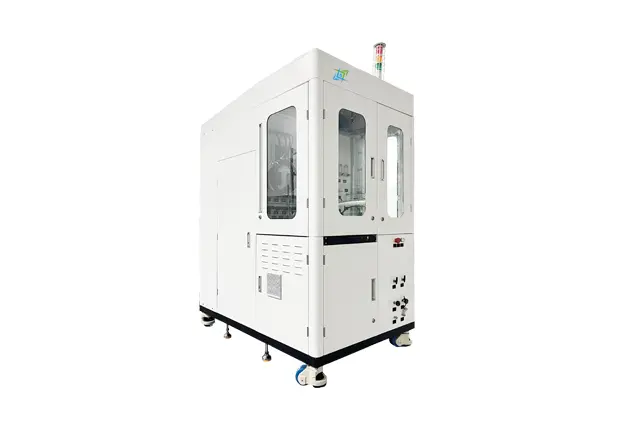
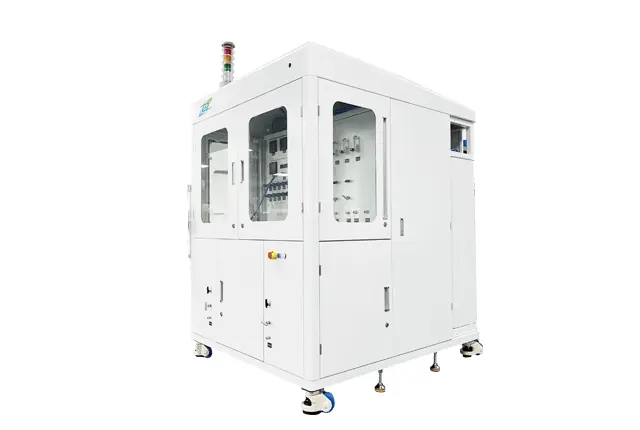
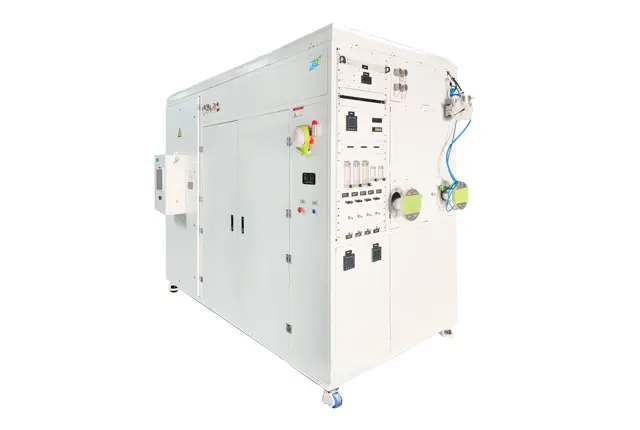
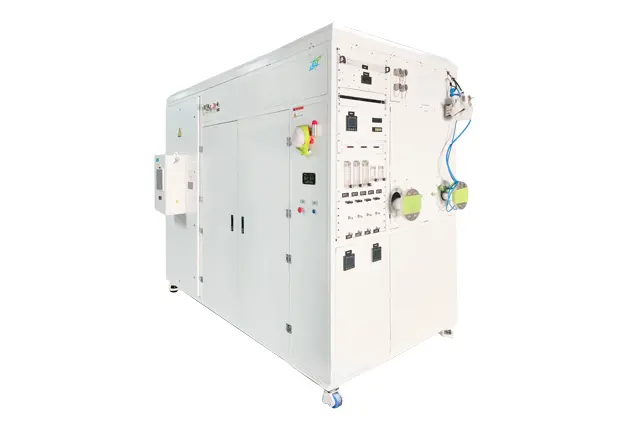
Tensor PEM electrolyser test bench can be used for testing 1kW~3kW PEM electrolyser cell/stack. This station can control the flow, pressure and temperature of the anode and cathode of the electrolyser, simulate the working condition, and collect various data of it.
| DUT | Model | Min P/kW | Max P/kW | H2/NLPM | O2/NLPM | Coolant/LPM | Current/A | Stack Temp/°C | Gas Pressure /Barg | Cell# | Cell Hardware | EIS | HFR | Pressure Boost | H2 Mix | Water Balance | Gas Analyze | Dual Coolant | DI Polish | High Accr. Power Supply | |
| PEM Electrolyser MEA Tester | ELZ500WN | 0.05 | 0.5 | 1.5 | 0.75 | 1.0 | 200 | 90 | 3 | 4 | O | O | O | O | O | O | Y | O | |||
| PEM Electrolyser MEA Tester | ELZ1 | 0.1 | 1 | 3 | 1.5 | 2.0 | 200 | 90 | 50 | 8 | O | O | O | O | O | O | O | Y | O | ||
| PEM Electrolyser Short Stack Tester | ELZ50 | 2.5 | 50 | 150 | 75 | 50 | 6000 | 90 | 50 | 72 | O | O | O | O | O | O | Y | O | |||
| PEM Electrolyser Short Stack Tester | ELZ300 | 15 | 300 | 800 | 400 | 250 | 6000 | 90 | 50 | 120 | O | O | O | O | O | Y | O | ||||
| PEM Electrolyser Short Stack Tester | ELZ500 | 30 | 500 | 1700 | 850 | 450 | 6000 | 90 | 50 | 168 | O | O | O | O | O | Y | O |
1. Cathode gas back pressure control technology: Install a new type of back pressure valve on the cathode gas discharge path of the electrolytic cell to improve the accuracy of back pressure control.
2. Large-span flow rate regulation technology. The test bench is downward compatible and can meet the testing requirements of some unconventional working conditions.
3. Precise control technology for alkali solution concentration. Continuously adjust the supply of pure water or alkali solution based on the real-time alkali solution concentration collected by the alkali solution concentration meter to ensure that the alkali solution concentration remains within a controllable range.
An electrolysis tester is essential for ensuring the safety, efficiency, and performance of hydrogen production systems.
Optimize hydrogen efficiency: Advanced electrolyzer testing allows precise control of temperature, pressure, and current density to maximize hydrogen output and reduce energy loss.
Validate system performance: A professional electrolysis tester provides accurate data on electrolyser stack efficiency, durability, and degradation.
Enhance safety: Continuous monitoring helps detect leaks, overheating, and abnormal conditions in hydrogen systems.
Support R&D and scaling: An electrolysis test station enables real-world simulation, making it critical for both laboratory research and industrial deployment.

An electrolysis tester is used to evaluate the performance, efficiency, and safety of hydrogen production systems. It enables precise electrolyzer testing by controlling operating conditions such as temperature, pressure, and current, while collecting real-time data on hydrogen output and system stability.
This makes it essential for R&D, quality validation, and industrial deployment of electrolyser technologies.
A PEM electrolyzer test station operates by simulating real hydrogen production conditions within a controlled environment. It supplies purified water to the electrolyser stack, applies regulated electrical power, and manages temperature and pressure through integrated subsystems.
During electrolyzer testing, the system continuously monitors key parameters such as voltage, current density, gas flow, and efficiency. The electrolysis tester records and analyzes this data in real time, allowing engineers to evaluate performance, detect issues, and optimize system operation.
An electrolysis tester is a specialized electrolysis test station designed specifically for hydrogen systems, while an electronic test bench is a general-purpose testing platform.
An electrolysis tester supports full electrolyzer testing, including gas management, water supply, and safety monitoring.
An electronic test bench typically focuses on electrical measurements and lacks hydrogen-specific system integration.
As a result, an electrolyzer test station provides higher accuracy, better control, and more relevant data for hydrogen applications.
The cost of an electrolysis test station varies depending on system configuration, testing capacity, and level of automation.
Key factors affecting price include:
Power range and stack size
Measurement precision and sensor integration
Software and data analysis capabilities
Customization for specific electrolyzer testing requirements
Entry-level systems may be suitable for laboratory use, while advanced industrial electrolyzer test stations require higher investment due to their full system integration and high-performance capabilities.

 English