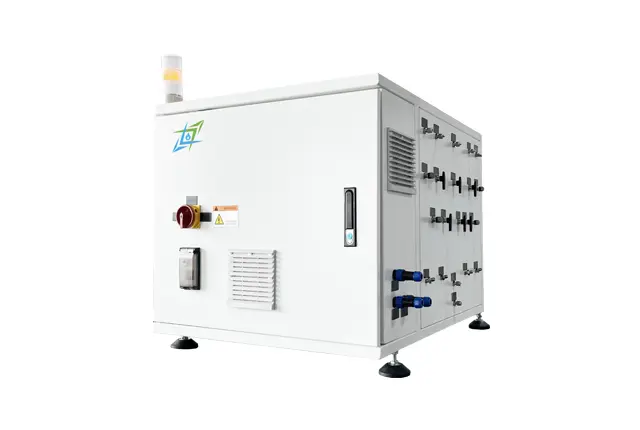
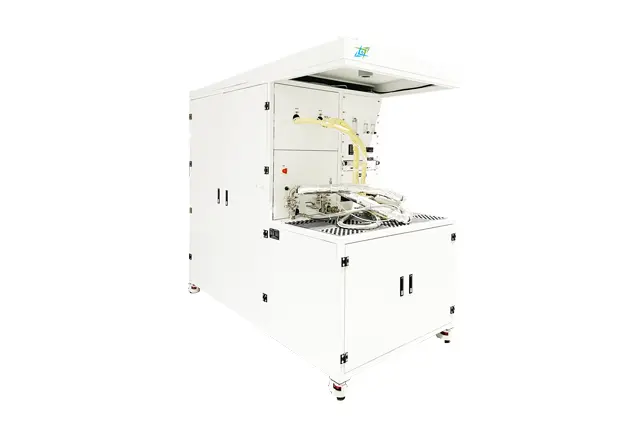
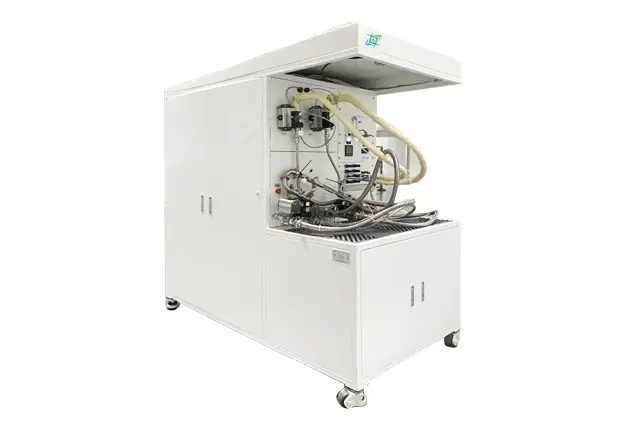
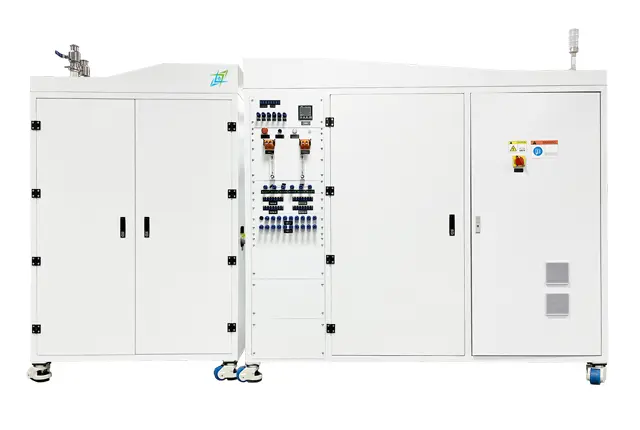
A fuel cell test station is a specialized system designed to evaluate the performance, durability, and efficiency of fuel cell stacks under controlled operating conditions. It is widely used in hydrogen energy development, enabling engineers to simulate real-world environments and collect high-precision data. Modern testing platforms, such as the TensorTechs PEM fuel cell stack testing bench, go beyond basic measurement. They function as a fully integrated hydrogen testing system, supporting electrochemical analysis, system diagnostics, and long-term durability testing.
Fuel cells are complex electrochemical systems that rely on precise control of hydrogen flow, air supply, temperature, and humidity. Even small deviations can significantly impact performance and lifespan. A professional fuel cell test station is essential because it:
Ensures performance optimization: Accurately evaluates voltage efficiency, polarization curves, and system output
Simulates real-world conditions: Replicates dynamic load, temperature, and pressure scenarios
Improves durability: Identifies degradation mechanisms over long-term operation
Enhances safety: Monitors hydrogen consumption and system stability
Accelerates innovation: Supports R&D for new materials, MEA designs, and stack configurations
Advanced test stations can simulate full operational environments while continuously collecting data, making them indispensable for both research and industrial applications.
The TensorTechs solution is a high-performance fuel cell test station specifically designed for PEM fuel cell stacks and systems. It supports comprehensive testing functions, including:
Electrochemical performance testing
Sensitivity and durability testing
Dynamic response simulation
Full system diagnostics
The system precisely controls key parameters such as hydrogen flow, air supply, temperature, humidity, and pressure, enabling accurate simulation of real operating conditions.
The test station enables precise control of:
Anode and cathode flow rate
Temperature and humidity
Gas pressure and stoichiometry
Cooling system parameters
This ensures accurate replication of real-world fuel cell operation.
Integrated software systems allow:
Continuous monitoring of cell voltage and system performance
Real-time data logging and analysis
Automated testing protocols
This transforms the test station into an intelligent electronic test platform.
The system can simulate:
Load changes and transient conditions
Hydrogen supply fluctuations
Environmental variations
This enables advanced fuel cell system validation for automotive, energy, and industrial applications.
TensorTechs provides multiple configurations, supporting:
Single cell testing (W-level)
Short stack testing (kW-level)
Full stack testing (up to hundreds of kW)
This makes the fuel cell test station suitable for both laboratory and industrial use.
Below is a simplified overview of typical system capabilities:
| Parameter | Typical Range |
|---|---|
| Power Range | 0.005 kW – 400 kW |
| Hydrogen Flow | Up to 9600 NLPM |
| Air Flow | Up to 27000 NLPM |
| Temperature Control | Up to 100°C |
| Pressure Control | Up to 300 kPag |
| Current Range | Up to 1000 A |
| Stack Size | Up to 1200 cells |
These capabilities allow comprehensive testing across different fuel cell scales and applications.
A modern fuel cell test station is widely used across the hydrogen value chain:
Supports system validation for hydrogen-based power generation.
Simulates dynamic operating conditions for automotive fuel cell systems.
Used in universities and laboratories for MEA and catalyst research.
Ensures product quality and consistency through standardized testing.
Provides high-reliability testing for critical energy systems.
A fuel cell test station is significantly more advanced than a conventional test bench.
| Feature | Fuel Cell Test Station | Traditional Test Bench |
|---|---|---|
| Purpose | Hydrogen system testing | General testing |
| Control | Multi-parameter (gas, temp, pressure) | Limited control |
| Accuracy | High-precision electrochemical data | Standard measurement |
| Integration | Full system (gas, cooling, safety) | Standalone equipment |
| Application | Fuel cells, hydrogen systems | General engineering |
In short, a fuel cell test station is a specialized hydrogen testing platform, not just a general-purpose electronic test bench.
TensorTechs offers a complete solution for hydrogen system testing with key advantages:
High-precision control and measurement
Full system integration
Scalable configurations
Advanced data analysis software
Reliable performance in industrial environments
These capabilities make it an ideal choice for companies developing next-generation hydrogen technologies.
A fuel cell test station is a critical tool for hydrogen system development, enabling precise performance evaluation, safety validation, and technology optimization.The TensorTechs PEM fuel cell stack testing bench provides a complete, scalable, and high-precision solution for fuel cell testing, helping accelerate innovation and deployment in the global hydrogen economy.
A fuel cell test station is used to evaluate the performance, efficiency, and durability of fuel cell stacks by simulating real operating conditions and collecting detailed system data.
It supplies hydrogen and air to the fuel cell, controls temperature and humidity, applies electrical load, and monitors system performance in real time to analyze efficiency and stability.
Typical parameters include voltage, current density, hydrogen consumption, temperature, pressure, humidity, and system efficiency.
They are widely used in hydrogen energy, automotive fuel cell development, research institutions, and industrial manufacturing.
The cost depends on system size, power range, automation level, and customization requirements. Laboratory systems are more affordable, while industrial-scale test stations require higher investment.
 English