As the world's largest hydrogen producer and the largest hydrogen consumer, China's current hydrogen production structure is mainly based on fossil energy hydrogen production, supplemented by industrial by-product hydrogen, with the scale of water electrolysis hydrogen production being relatively small. In 2021, China's hydrogen energy production totaled 34.68 million tons, with fossil energy hydrogen production accounting for 80.3%, industrial by-product hydrogen production accounting for 18.5%, and water electrolysis hydrogen production accounting for only 1.2%, of which less than 0.1% used renewable energy for water electrolysis hydrogen production. The International Hydrogen Energy Committee predicts that the global hydrogen demand will be about 14 EJ (exajoules) in 2030. Among various industries, the demand for hydrogen is highest in the refining, chemical, and ammonia synthesis sectors. Nowadays, coal-based hydrogen production is still the preferred technology for large-scale hydrogen production in China, but its high carbon dioxide emissions are not conducive to achieving the "dual carbon" goals. Currently, water electrolysis for hydrogen production is considered the future direction of hydrogen production development, especially using renewable energy for water electrolysis hydrogen production. It has the potential to transfer a large amount of renewable energy power to industrial sectors that are difficult to deeply decarbonize, making it a direction many countries are targeting and focusing on, with PEM being the most promising technology.
PEM (Proton Exchange Membrane) water electrolysis hydrogen production refers to the process of using a proton exchange membrane as a solid electrolyte and pure water as the raw material for hydrogen production. Compared with alkaline water electrolysis hydrogen production technology, PEM water electrolysis hydrogen production technology has the advantages of high current density, high hydrogen purity, and fast response speed, making it more efficient. However, since PEM electrolyzers need to operate in highly acidic and oxidative environments, the equipment is more dependent on expensive metal materials such as iridium, platinum, and titanium, resulting in high costs. Key components such as the pem electrolyzer bipolar plate also require excellent corrosion resistance, electrical conductivity, and durability to ensure stable long-term operation of the electrolyzer system.
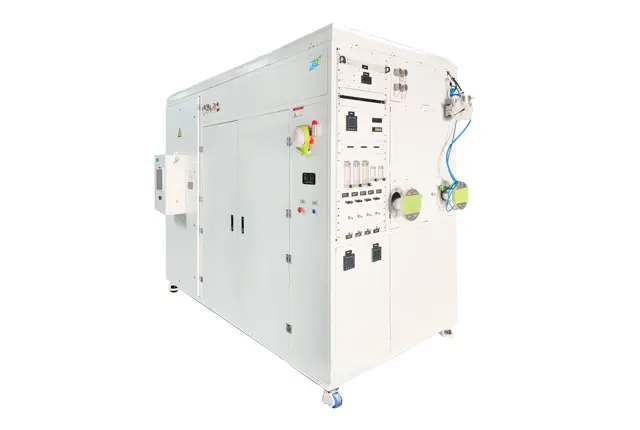
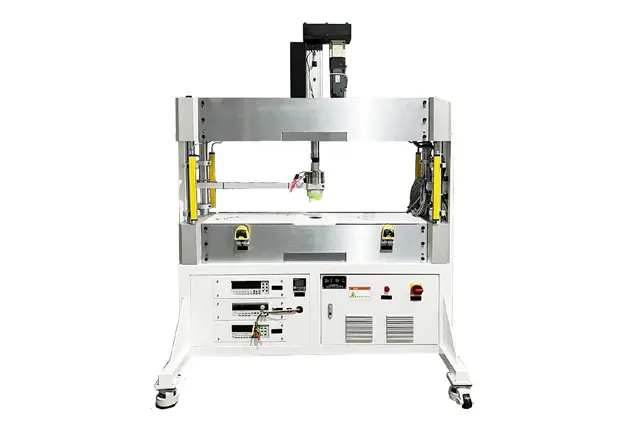
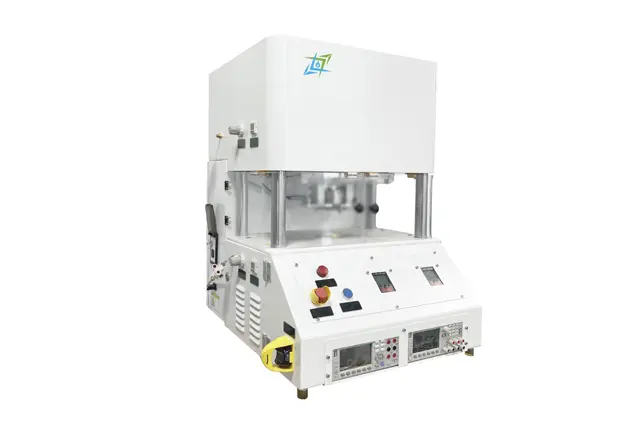
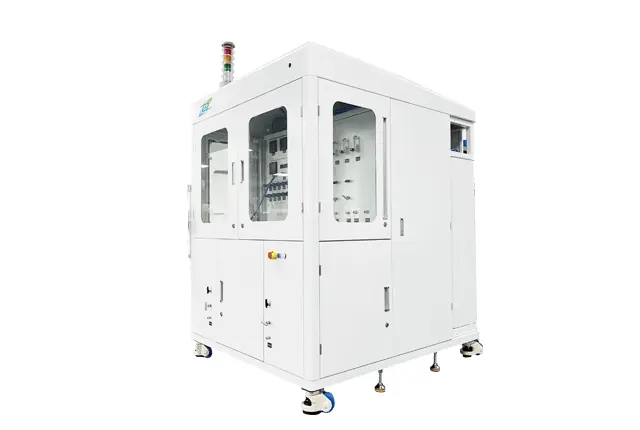
PEM hydrogen production is mainly divided into the following four steps. ① Water decomposition and oxygen evolution: Water (2H2O) undergoes a hydrolysis reaction at the anode under the influence of an electric field and catalyst, splitting into protons (4H+), electrons (4e-), and gaseous oxygen (O2), as shown in equation (1). During PEM electrolyzer development and performance verification, advanced testing equipment such as electrolyzer test station can help researchers analyze operating parameters and improve the reliability of hydrogen production systems. 2H2O = 4H+ + 4e- + O2 (1) ② Proton exchange: 4H+ passes through the solid PEM containing sulfonic acid functional groups and reaches the cathode under the action of the electric field. ③ Electron conduction: 4e- are transferred from the anode to the cathode through an external circuit. ④ Hydrogen evolution: 4H+ at the cathode gain 4e- to produce 2H2, as shown in equation (2). 4H+ + 4e- = 2H2 (2)
Compared to traditional alkaline water electrolysis hydrogen production, PEM hydrogen production has the following advantages: ① High purity and no pollution: PEM hydrogen production uses a proton exchange membrane solid electrolyte. The generated gas does not need to undergo de-alkalization treatment, and the ion membrane with molecular-scale micropores is thin, making hydrogen back-diffusion unlikely. The PEM type only requires pure water without any additives, resulting in no pollution from corrosive liquids and high gas purity. In contrast, traditional alkaline electrolytes require the addition of 15% NaOH or 30% KOH, leading to strong corrosiveness and potential pollution of the conduits by liquid leakage. ② High conversion efficiency: The catalytic electrodes of the PEM type belong to molecular-scale micropores, tightly adhering to both sides of the ion membrane and within its internal channels, forming a zero-gap catalytic electrode. This provides a large reaction area and high conversion efficiency. Traditional alkaline electrodes have a small distance limit between them, resulting in high inter-electrode resistance, increased current, high heat generation, and low conversion efficiency. ③ Light weight and small volume: The PEM type electrolyzer has a compact and elastic current collector structure within its two electrode compartments, making the electrolyzer light and small, with the weight being only one-third of that of a conventional electrolyzer with the same hydrogen production capacity. The advantage is low inter-electrode resistance within the cell. Traditional alkaline electrolyzers, on the other hand, have no elasticity in the current collector of the electrode compartments, leading to high energy loss and low conversion efficiency. ④ Adaptability to renewable energy generation fluctuations: The PEM water electrolysis hydrogen production system has a fast response speed and can adapt to dynamic operations, making it very suitable for handling the unevenness, intermittency, and fluctuations of renewable energy such as wind and solar power transmission.
From a technical perspective, the compact structure and small volume of the electrolytic cells used facilitate rapid loading changes, while the high efficiency of the electrolyzer, the high purity of the obtained gas, the low energy consumption, and the greatly improved safety and reliability make it more suitable for the volatility of renewable energy. Therefore, PEM water electrolysis technology is recognized as one of the promising hydrogen production technologies in the hydrogen production field. However, because PEM electrolyzers need to operate in highly acidic and oxidative environments, the equipment is more dependent on expensive metal materials such as iridium, platinum, and titanium, leading to high costs. This is the bottleneck restricting the development of PEM hydrogen production technology and the direction for research breakthroughs.
 English